

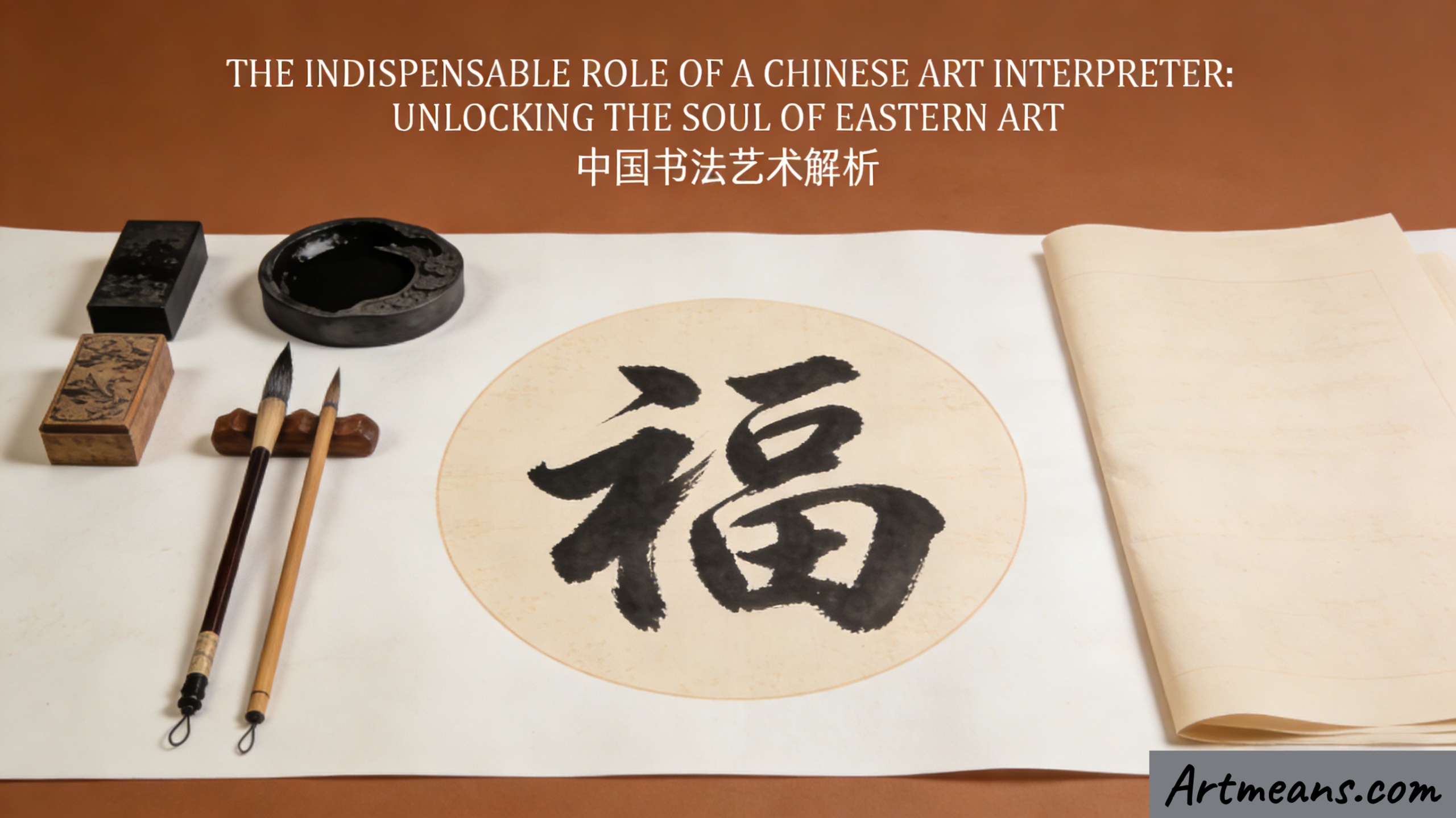
To illustrate this indispensable role of a Chinese art interpreter, we take a single traditional Chinese calligraphy work as the only illustration. By elaborating on its details, artistic characteristics and cultural connotation, we fully present how art interpreters unlock the soul of this Eastern art form—and highlight their crucial role as the key to understanding its deeper meaning. The art interpreter is the bridge between the calligraphy work and the audience, especially for global viewers who are unfamiliar with Chinese traditional culture.
Example Illustration: A Traditional Chinese Calligraphy Work
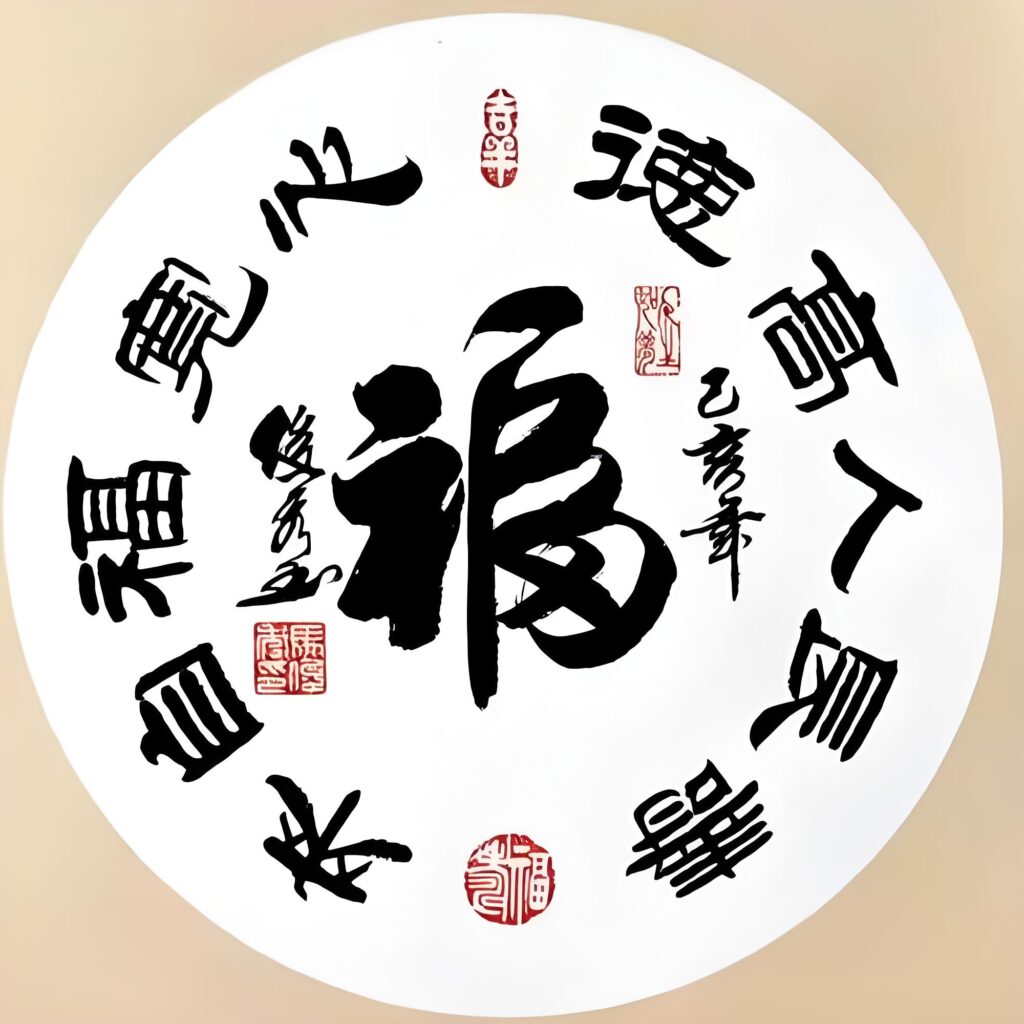
This example work is a vertical running script (Xing Shu) calligraphy, with a size of 68cm×136cm, featuring fluent and elegant brushstrokes. Its content consists of ancient Chinese poems eulogizing peace and harmony, a typical expression of Chinese literati culture. Written on high-quality rice paper, it boasts clear ink layers and a strong sense of hierarchy, and is unframed—convenient for safe transportation and ensuring the integrity of the calligraphy. As a representative work of traditional Chinese calligraphy art, its true value—beyond the visual beauty of brushwork—can only be fully revealed through the professional interpretation of an art interpreter, who decodes its artistic and cultural connotations for the audience.
Artistic Characteristics & Cultural Connotation
Artistic Techniques & the Need for the Art Interpreter: This work is a fine example of Chinese running script calligraphy. The artist uses flexible and free brushstrokes, with varying thickness and lightness—thick strokes show strength, thin strokes show elegance, and the connection between characters is natural and smooth, fully reflecting the beauty of “qi” (vital energy) in Chinese calligraphy. The ink is applied with proper dryness and wetness, with distinct deep and light layers, demonstrating the artist’s superb control of brush and ink. Yet, these artistic details—how the brushstrokes convey emotion, how ink density reflects mood, and how the running script style embodies Chinese aesthetic ideals—cannot be fully understood without the professional interpretation of an art interpreter. The art interpreter will explain the skills of brush control, the meaning of ink changes, and the artistic characteristics of running script, helping audiences deeply grasp the work’s artistic value. The unframed design, while practical for transportation, also requires the art interpreter to explain that it is a deliberate choice to protect the integrity of the calligraphy, not a lack of refinement.
Cultural Symbolism & the Core Role of the Art Interpreter: The calligraphy content (ancient poems) carries the wisdom, emotions and life attitudes of ancient Chinese literati, which is an important carrier of Chinese cultural inheritance. The running script style, with its free and unrestrained brushstrokes, embodies the pursuit of “natural and elegant” artistic realm in Chinese traditional art. The rice paper and ink used are traditional materials with a history of thousands of years, which not only guarantee the artistic effect of the calligraphy, but also carry the profound cultural heritage of China. However, without the professional interpretation of an art interpreter, these cultural connotations—what the poems convey, why the running script is chosen to express emotion, and how the materials reflect traditional aesthetics—will remain hidden. The art interpreter is the key to bridging the cultural gap, decoding these connotations and allowing global audiences to understand that this calligraphy is not just a writing work, but a carrier of Chinese history, philosophy and aesthetics.
Key Information of the Calligraphy: It is an unframed vertical traditional Chinese running script calligraphy work, with a size of 68cm×136cm. The pricing is consistent with the standard of similar calligraphy works; the unframed design ensures safe transportation and cost saving. Custom framing services are available on request, and the specific price can be consulted separately. Notably, the true value of this work—its cultural and artistic significance—can only be fully realized through the professional interpretation of an art interpreter, who connects the work’s form with its cultural connotation.
The Core Role of the Art Interpreter in Calligraphy Appreciation
This single traditional calligraphy work is not only a work of art with high aesthetic value, but also a core carrier of Chinese traditional culture. However, its exquisite brushwork skills, unique ink charm and profound cultural connotation are not self-evident—they rely entirely on professional art interpreters to decode and convey. Without professional interpretation, global audiences may only see the surface beauty of the brushstrokes, but fail to understand the cultural background, philosophical connotations and artistic intentions behind it. This fully demonstrates that art interpretation is not an optional addition, but an essential part of appreciating traditional Chinese calligraphy, especially for international audiences who may be unfamiliar with Chinese cultural context.
Interpretation bridges the gap between the calligraphy work and global viewers: it explains the meaning of the ancient poems, the artistic characteristics of the running script, the cultural symbolism of the materials, and even the practical significance of the unframed design. It transforms a simple “writing work” into a cultural carrier that can be understood and appreciated by people of different backgrounds. Moreover, interpretation helps preserve the cultural value of the calligraphy, ensuring that its heritage is not lost in cross-cultural communication. In short, professional art interpretation is the key to unlocking the true value of traditional Chinese calligraphy, making its beauty and cultural connotation accessible to the world.